
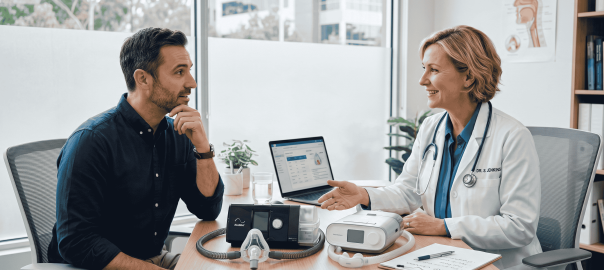
If you’re a light sleeper with sleep apnea, the difference between 26.6 and 28 decibels might actually matter. ResMed edges out Philips in lab tests, but there’s a surprising reason why your mask could be louder than either machine.
Key Takeaways
- ResMed’s AirSense 10 AutoSet operates at approximately 26.6 dB – slightly quieter than the Philips DreamStation 2’s rated 27-28 dB, but both fall within whisper range.
- Even a 1-2 dB difference can matter for light sleepers, especially near the WHO’s recommended 30 dB(A) bedroom threshold.
- The ResMed AirMini travel CPAP is compact but not always the quietest option – an important distinction covered below.
- Mask leaks, worn parts, and condensation in tubing are often louder culprits than the machine itself.
- Get Health Tips offers a detailed side-by-side breakdown of ResMed and Philips CPAP machines for sleep apnea sufferers at gethealthtips.life.
Noise is one of the most overlooked factors when choosing a CPAP machine – until it keeps someone awake at 2 a.m. Both ResMed and Philips have engineered their flagship home devices to run quietly, but the numbers tell a nuanced story. Here’s what the specs, user reports, and acoustic science actually say.
The Noise Gap Is Smaller Than You Think
Both brands are close. ResMed edges ahead on paper, but the margin separating a ResMed AirSense 10 AutoSet (26.6 dB) from a Philips DreamStation 2 (27-28 dB) is roughly 1-1.4 dB – a gap most people cannot consciously detect in a quiet bedroom. Modern CPAP engineering, including advanced brushless motors, vibration-dampening housings, and layered acoustic insulation, has pushed both brands into territory genuinely comparable to the sound of rustling leaves.
So why does ResMed still win the noise conversation? Partly because of real-world variability. Manufacturer specs are measured under controlled lab conditions. In everyday use, factors like pressure setting, humidity level, tubing length, and machine age can push a unit noticeably above its rated output. When those factors are equal, ResMed’s slightly lower baseline gives it a modest but real advantage for noise-sensitive sleepers.
Why Even 1-2 dB Can Affect Your Sleep
Decibels are deceptive. The scale is logarithmic, not linear, which means the relationship between a number on a spec sheet and what the brain registers during sleep is more complicated than it first appears.
WHO’s 30 dB(A) Bedroom Threshold
The World Health Organization recommends that nighttime indoor noise stay at or below 30 dB(A) to protect sleep quality. Above that threshold, elevated sound levels are linked to fragmented sleep, frequent micro-awakenings, and reduced deep sleep efficiency – even when the sleeper doesn’t consciously wake up. Both the AirSense 10 and the DreamStation 2 sit under this ceiling at their rated specs, which is reassuring. That also means there’s very little headroom before a machine starts affecting therapy outcomes.
How Decibels Scale: Intensity vs. Perception
A 3 dB increase represents a doubling of acoustic intensity. Human perception is less sensitive, though – most people notice a sound as noticeably louder only around the 5-10 dB mark. That’s why the 1-2 dB gap between ResMed and Philips is practically imperceptible to most users under normal conditions. Where it becomes relevant is for individuals with heightened sound sensitivity, or when a machine is already pushing toward the 30 dB ceiling due to wear or pressure settings.
ResMed’s Home Machines: How Quiet Are They?
ResMed’s reputation for quiet operation is well-earned, particularly in their flagship home line. The brand uses a combination of brushless motor technology and multi-layer acoustic chambers to suppress both airflow turbulence and mechanical vibration.
AirSense 10 vs. AirSense 11, by the Numbers
The ResMed AirSense 10 AutoSet is rated at 26.6 dB – one of the lowest figures among full-size home CPAP machines currently available. Its successor, the ResMed AirSense 11 AutoSet, comes in at approximately 27 dB, a 0.4 dB increase that is statistically imperceptible to the human ear. The AirSense 11 trades a tiny fraction of acoustic advantage for improved software features, a more refined touchscreen interface, and enhanced AutoSet algorithm performance. For noise-sensitive users, either model delivers essentially the same experience: near-silent operation that sits comfortably beneath the WHO’s 30 dB(A) guideline.
Philips DreamStation 2: Specs vs. Real-World Sound
The Philips DreamStation 2 carries a manufacturer-rated noise level of 27-28 dB(A) – competitive with ResMed’s lineup on paper. The machine features a redesigned motor and updated housing compared to earlier DreamStation models, and for most users it runs unobtrusively through the night.
Real-world performance does introduce some caution, however. Unit-to-unit variation has been noted in user communities, and any machine operating near the 30 dB threshold by design has limited room before deviations push it into perceptibly disruptive territory.
Home Machine Noise: ResMed vs. Philips Head-to-Head
Model Rated Noise Level Real-World Notes ResMed AirSense 10 AutoSet 26.6 dB Consistently cited as one of the quietest full-size CPAPs available ResMed AirSense 11 AutoSet ~27 dB Marginally louder than AirSense 10; difference is inaudible in practice Philips DreamStation 2 27-28 dB(A) Competitive spec; some unit-to-unit variation reported in user communities
On rated specs alone, ResMed leads by a narrow margin. In day-to-day use, both brands operate quietly enough that most users won’t distinguish one from the other – but for those who are genuinely noise-sensitive, the lower baseline of the AirSense 10 provides a small but meaningful buffer.
Travel CPAPs: AirMini Is Not the Quietest Option
The ResMed AirMini is the world’s smallest CPAP device – palm-sized, TSA-approved, and purpose-built for travel. At approximately 30 dB, it sits right at the WHO’s bedroom threshold. Compact machines face a real engineering trade-off: smaller housings leave less room for acoustic dampening material and vibration isolation. The AirMini’s acoustic performance is respectable for its size, but should not be compared directly to home machines rated at 26-27 dB.
What Else Makes a CPAP Loud
The machine’s rated decibel level is only part of the noise equation. In many cases, the loudest sounds during CPAP therapy have nothing to do with the motor at all.
Mask Leaks and Mechanical Wear
Mask leaks are the most common noise complaint among CPAP users. A poor seal around the nose or mouth generates squeaks, whistles, and rhythmic popping – all far more disruptive than the steady hum of a well-functioning motor. Several mechanical factors also compound over time:
- Worn motor bearings – produce rattling or grinding sounds as they degrade
- Clogged or dirty filters – force the motor to work harder and louder to maintain pressure
- Condensation in the tubing – creates gurgling as water collects in the hose
- Loose components – water chambers, humidifier lids, or unsecured tubing connectors vibrate audibly at operating pressure
Tips to Reduce Noise on Any Machine
Regardless of brand, these practical steps can bring noise levels down noticeably:
- Place the machine below bed level – reduces vibration transmission through the mattress and frame
- Use a CPAP hose cover or insulated tubing – reduces condensation and dampens airflow sound
- Ensure the water chamber is properly seated – even a slightly misaligned chamber rattles at pressure
- Check mask fit regularly – a seal that was correct months ago may have degraded as cushion material softens
- Replace filters on schedule – a clean filter maintains airflow efficiency and keeps the motor running at lower effort
- Service or replace the motor if aging – worn bearings are a common culprit when machines get louder over time
ResMed Leads Slightly – But Both Brands Are Within Whisper Range
ResMed holds a genuine but narrow acoustic advantage over Philips in the home CPAP category. The AirSense 10 AutoSet’s 26.6 dB rating is about as quiet as a full-size CPAP machine gets, and both the AirSense 10 and AirSense 11 consistently land below the WHO’s 30 dB(A) bedroom threshold. The Philips DreamStation 2, at 27-28 dB(A), trails by roughly 1-1.4 dB on paper – close enough that the average user won’t hear the difference, but meaningful for those who are specifically noise-sensitive.
The smarter question to ask isn’t only which brand rates quieter, but whether the machine in use is well-maintained, properly fitted with a leak-free mask, and set up correctly in the bedroom environment. A perfectly rated machine with a leaking mask will be louder than a mid-range unit with an airtight seal. Both ResMed and Philips have engineered their home machines into whisper territory – getting the most from either one comes down to setup, maintenance, and fit.
For practical, evidence-based guidance on sleep apnea treatment options, Get Health Tips covers everything from machine comparisons to therapy best practices in one place.
