
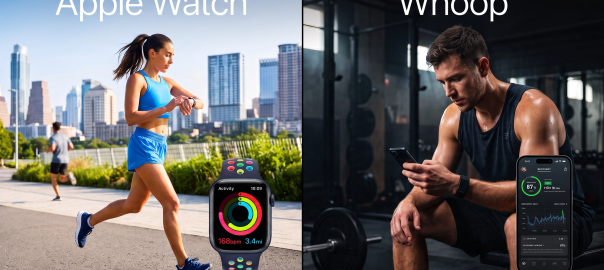
Which wearable is the better choice for improving your health and recovery?
Wearable technology has evolved far beyond counting steps.
Today’s devices can monitor your sleep, estimate stress, measure heart rate variability (HRV), track workouts and help you understand how well your body is recovering from exercise.
Two of the most talked-about options are the Apple Watch Series 11 and WHOOP 4.0.
Although both collect many of the same health measurements, they approach wellness in very different ways.
The Apple Watch is a premium smartwatch that includes comprehensive health and fitness tracking alongside everyday features such as messaging, navigation, payments and apps.
WHOOP takes almost the opposite approach.
It has no traditional watch display, no notifications and no apps. Instead, it focuses almost entirely on helping you understand recovery, sleep and daily readiness.
So which one is right for you?
The answer depends less on the specifications and more on how you want to use the information these devices provide.
Let’s compare them.
Quick Verdict
Choose Apple Watch Series 11 if you:
✅ Want an all-in-one smartwatch.
✅ Already use an iPhone.
✅ Value notifications, GPS, payments and apps.
✅ Want excellent health tracking alongside everyday convenience.
Choose WHOOP 4.0 if you:
✅ Train regularly.
✅ Want detailed recovery coaching.
✅ Want deeper sleep and strain analysis.
✅ Prefer guidance rather than simply viewing health data.
Best Overall for Most People
🏆 Apple Watch Series 11
Best for Recovery and Performance
🏆 WHOOP 4.0
Apple Watch Series 11 vs WHOOP 4.0 at a Glance
| Feature | Apple Watch Series 11 | WHOOP 4.0 |
|---|---|---|
| Smartwatch features | ⭐⭐⭐⭐⭐ | ⭐ |
| Recovery coaching | ⭐⭐⭐ | ⭐⭐⭐⭐⭐ |
| HRV tracking | ⭐⭐⭐⭐ | ⭐⭐⭐⭐⭐ |
| Sleep tracking | ⭐⭐⭐⭐ | ⭐⭐⭐⭐⭐ |
| Battery life | ⭐⭐ | ⭐⭐⭐⭐⭐ |
| GPS | Yes | No (uses connected device where applicable) |
| Display | Full colour touchscreen | Screenless |
| Subscription | Optional for some third-party apps | Required |
| Best for | Everyday users | Athletes & recovery-focused users |
Understanding the Difference
At first glance these wearables appear to compete directly.
In reality, they’re trying to solve different problems.
Apple asks:
“How can we build the best smartwatch with excellent health features?”
WHOOP asks:
“How can we help people recover better and perform at their best?”
That difference influences almost every part of the user experience.
Apple gives you access to a wide range of health information including heart rate, HRV, sleep, activity, ECG (where available), blood oxygen (depending on model and region), workout tracking and more.
WHOOP collects many similar measurements but places far greater emphasis on interpreting them for you. Each morning it analyses your data and provides insights into recovery, sleep and daily strain, helping you decide whether to push harder or prioritise recovery. (9to5Mac)
For many users, that coaching element is what sets WHOOP apart.
What Is Heart Rate Variability (HRV)?
One of the most valuable health metrics these devices measure is Heart Rate Variability, commonly known as HRV.
Despite the name, HRV doesn’t measure how fast your heart beats.
Instead, it measures the tiny differences in time between one heartbeat and the next.
Although those intervals are measured in milliseconds, they can reveal useful information about how your nervous system is responding to exercise, stress and recovery.
Generally speaking:
- Higher HRV often reflects better recovery and greater adaptability.
- Lower HRV can occur after intense exercise, poor sleep, illness or increased stress.
It’s important to remember that HRV varies naturally from person to person.
A “good” HRV for one individual may be completely normal for someone else.
That’s why most experts recommend focusing on your own long-term trend rather than comparing your numbers with other people. (arXiv)
💡 Health Tip
Don’t worry if your HRV changes from one day to the next.
Sleep quality, hydration, stress, travel and hard training sessions can all influence HRV.
The most useful information comes from watching the trend over weeks and months rather than reacting to a single reading.
Recovery Tracking Compared
This is where the two devices begin to separate.
Apple Watch Series 11
Apple collects a wide range of recovery-related data including:
- Heart rate
- Heart Rate Variability
- Resting heart rate
- Sleep information
- Activity levels
- Workout history
However, Apple generally leaves it up to you—or compatible third-party apps—to interpret what those measurements mean for your training or daily readiness. While newer Apple features such as Training Load help users understand exercise intensity, Apple does not natively provide a single daily recovery score in the way WHOOP does. (SanoLabs)
For many people, that’s perfectly adequate.
You have access to extensive health information without feeling overwhelmed by coaching.
WHOOP 4.0
WHOOP takes a different approach.
Each morning it analyses several physiological measurements—including HRV, resting heart rate, respiratory rate and sleep—to generate a daily Recovery Score. It also tracks daily Strain, helping users balance exercise with adequate recovery. (Whoop Support)
Instead of simply presenting charts and graphs, WHOOP encourages action.
If your recovery is poor, it may suggest prioritising rest or reducing training intensity.
If your recovery is excellent, it may indicate that your body is ready for a more demanding workout.
For athletes and fitness enthusiasts, that personalised guidance can be extremely valuable.
Which Approach Is Better?
Neither approach is objectively better.
They’re simply designed for different users.
If you enjoy analysing your own health data and want one device that also handles everyday tasks, the Apple Watch offers impressive versatility.
If your main goal is improving recovery, optimising training and understanding how your body responds to exercise, WHOOP provides a more focused experience with recovery and coaching at its core. (ScienceInsights)
Sleep & Wellness Tracking
Sleep is one of the most important factors influencing recovery, energy levels and long-term health. Both Apple Watch Series 11 and WHOOP 4.0 monitor sleep, but they approach it in different ways.
Apple Watch Series 11
The Apple Watch automatically tracks sleep duration and, when enabled, estimates time spent in different sleep stages such as REM, Core and Deep sleep. It also records overnight heart rate and can integrate with the Apple Health app to provide a broader view of your overall health.
For many users, this offers an excellent overview of sleep quality without becoming overly complicated.
If you enjoy exploring your own health data, the Apple ecosystem also supports a wide range of third-party sleep apps that provide additional analysis.
WHOOP 4.0
Sleep is one of WHOOP’s greatest strengths.
Rather than simply showing how long you slept, WHOOP analyses how much sleep your body needs based on recent activity, recovery and strain.
Each morning, the app provides a Sleep Performance score and personalised guidance to help you improve recovery over time.
For users who take training seriously or want to optimise recovery, these coaching features can be extremely valuable because they turn raw data into practical recommendations.
Wellness Tracking Beyond Exercise
Although recovery is an important focus, many people buy wearable devices to improve their general health rather than athletic performance.
Apple Watch Series 11
Apple includes a broad range of wellness features designed for everyday use, including:
- Heart rate monitoring
- Heart Rate Variability (HRV)
- ECG (where available)
- Irregular heart rhythm notifications (supported regions)
- Sleep tracking
- Mindfulness features
- Activity rings
- Workout tracking
- Fall Detection and Emergency SOS
- Medication reminders and Health app integration
For many users, this combination makes the Apple Watch an excellent everyday wellness companion.
WHOOP 4.0
WHOOP focuses less on everyday convenience and more on helping users understand how lifestyle choices influence recovery.
It tracks:
- Recovery Score
- Daily Strain
- Sleep Performance
- Resting Heart Rate
- Respiratory Rate
- Heart Rate Variability
- Stress trends
Instead of simply collecting information, WHOOP encourages users to adjust sleep, exercise and recovery habits based on the data it provides.
Battery Life
Battery life is one of the biggest practical differences between these devices.
Apple Watch Series 11
The Apple Watch generally requires charging every day or two, depending on usage and enabled features.
Although fast charging helps reduce downtime, many users develop the habit of charging overnight or while getting ready each morning.
WHOOP 4.0
WHOOP is designed for continuous wear.
Its battery typically lasts several days, and the wearable can even be charged while you’re wearing it using its portable battery pack.
For users who want uninterrupted monitoring of sleep and recovery, this is a significant advantage.
Subscription Costs
Price is another important consideration.
Apple Watch
You purchase the device outright.
Most core health and fitness features are included without an ongoing subscription, although some third-party apps may require separate payments.
WHOOP
WHOOP operates on a membership model.
Instead of buying the hardware separately, you pay an ongoing subscription that includes access to the device and the WHOOP platform.
Some users appreciate receiving continuous software improvements and personalised coaching through the membership, while others prefer avoiding recurring costs.
Before choosing WHOOP, it’s worth considering whether you’re comfortable with an ongoing subscription as part of your long-term wellness routine.
Things to Consider Before You Buy
Before making your decision, ask yourself a few simple questions:
- Do I want a smartwatch or a dedicated recovery tracker?
- Will I regularly use recovery and HRV information to guide my training?
- Is long battery life important to me?
- Do I already use an iPhone and Apple Health?
- Am I comfortable paying an ongoing subscription?
- Do I prefer detailed coaching or simply access to health data?
Answering these questions honestly will usually make the right choice much clearer.
Pros and Cons
Apple Watch Series 11
Pros
- Excellent all-round smartwatch
- Comprehensive health tracking
- Strong Apple ecosystem integration
- GPS, messaging, payments and apps
- No mandatory subscription for core features
Cons
- Shorter battery life
- Recovery insights are less coaching-focused
- Best experience requires an iPhone
WHOOP 4.0
Pros
- Outstanding recovery tracking
- Excellent sleep coaching
- Long battery life
- Comfortable for continuous wear
- Strong personalised recovery guidance
Cons
- Ongoing subscription required
- No display
- Limited smartwatch functionality
- Less suitable for users wanting an all-purpose wearable
Frequently Asked Questions
Which device is better for beginners?
For most beginners, the Apple Watch Series 11 offers a more versatile introduction to wearable health technology because it combines health tracking with everyday smartwatch features.
Is WHOOP more accurate than Apple Watch?
Both devices collect valuable physiological data, but they present it differently and use their own algorithms. Rather than thinking of one as universally “more accurate,” it’s more helpful to consider which device provides information in a way that best supports your goals.
Can HRV really improve my health?
HRV itself isn’t something you “improve” directly. Instead, monitoring HRV trends may help you understand how factors such as sleep, stress, illness and exercise affect your body’s recovery over time.
Which device is better for sleep?
WHOOP generally provides more detailed coaching and recovery-focused sleep insights, while the Apple Watch offers excellent sleep tracking integrated into a broader health and smartwatch experience.
Do I need a subscription?
The Apple Watch does not require a subscription for its core health features.
WHOOP requires an active membership to access its platform and personalised analytics.
Final Recommendation
Choosing between the Apple Watch Series 11 and WHOOP 4.0 isn’t really about deciding which device is “better.”
It’s about deciding which approach fits your lifestyle.
If you’re looking for one wearable that combines communication, fitness tracking, health monitoring and everyday convenience, the Apple Watch Series 11 is likely to be the better choice for most people.
If your primary goal is improving recovery, understanding your body’s readiness to train and building healthier habits through personalised coaching, WHOOP 4.0 offers one of the most focused recovery platforms currently available.
Both devices can provide valuable insights.
The real benefits come from using those insights consistently to improve sleep, manage stress, recover well and maintain healthy habits over time.
The best wearable isn’t necessarily the one with the longest feature list.
It’s the one you’ll enjoy wearing every day and actually use to make better decisions about your health.
💚 Editorial Note
This article is intended for educational purposes and is based on publicly available information about wearable health technology. Devices such as the Apple Watch Series 11 and WHOOP 4.0 can provide useful health and wellness insights, but they should not be used to diagnose, treat or replace professional medical advice.
If you have concerns about your health or experience symptoms that worry you, consult a qualified healthcare professional.
