
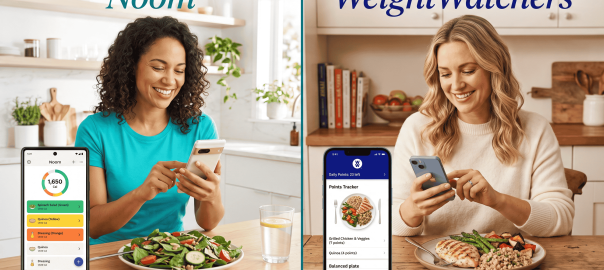
Choosing a weight loss program on popularity might be why you keep starting over. One study found 78% of users in a psychology-based program lost weight, another approach uses a points system backed by research in *The Lancet*. Which matches how your brain actually works?
Key Takeaways
Noom uses cognitive behavioral therapy (CBT) techniques to address the root psychology behind eating habits, while WeightWatchers (WW) uses a structured SmartPoints system to simplify food choices.
Neither program bans foods outright – both allow flexibility, just through different frameworks.
Research supports both programs: roughly 78% of Noom users in one large study reported weight loss, while a 2017 Lancet study showed WW participants outperformed standard medical advice over 12 months.
The best program is not the most popular one – it is the one that matches how your brain is wired to stay consistent.
Factors like metabolism and sleep also play a role in weight loss success that goes beyond any single program’s approach.
Noom or WeightWatchers: Which Approach Actually Fits You?
Picking between Noom and WeightWatchers is not about which program is “better” – it is about which one makes sense for how you think, eat, and stay motivated. One leans into psychology. The other leans into numbers. Both have real science behind them, and both have helped people lose meaningful weight.
Understanding the core difference between these two programs – psychology vs. points – is the fastest way to figure out which one actually fits your lifestyle. And if broader factors like sleep and metabolism are on your radar too, Get Health Tips breaks down how those elements interact with weight loss in ways most diet programs don’t address.
Two Very Different Weight Loss Philosophies
Noom and WeightWatchers both want the same outcome – sustainable weight loss – but they take completely different roads to get there.
Noom: Rewiring the Psychology of Eating
Noom’s core belief is that overeating is a behavior pattern, not a willpower problem. The app delivers daily lessons built around cognitive behavioral therapy (CBT), a well-researched psychological method that helps users identify thought patterns driving unhealthy choices. Rather than telling you what to eat, Noom asks why you eat the way you do.
The content is developed by psychologists, nutritionists, and behavioral health specialists. Lessons are short, interactive, and designed to create habit shifts over time – not just during a diet phase. This makes Noom more of a behavior change program than a traditional diet.
WeightWatchers: A Numbers-Based System That Works
WeightWatchers takes a different angle entirely. Rather than examining the psychology of eating, it simplifies food choices into a single number: SmartPoints. Every food gets a point value based on its nutritional makeup, and members receive a personalized daily and weekly points budget. Stay within the budget, make progress. The approach is straightforward, concrete, and for many people, highly effective.
WW gives you a system to manage your relationship with food rather than asking you to examine it. That distinction matters when deciding which program fits your personality.
How Each Program Tracks Your Food
Noom’s Green, Yellow, and Orange System
Noom organizes foods into three color categories based on calorie and nutrient density:
- Green foods – low-calorie, high-nutrient options like fruits, vegetables, whole grains, and unsweetened beverages. These should make up the bulk of meals.
- Yellow foods – moderate options like lean meats and low-fat dairy, consumed in controlled portions.
- Orange foods – higher-calorie, lower-nutrient items like fried foods and sweets. Not off-limits, but meant to be limited.
Users also receive a personalized calorie budget. The color system is meant to build food awareness over time, not just count macros. One limitation: because Noom does not teach traditional calorie counting, some users find it harder to maintain healthy habits if they ever leave the app.
WW’s SmartPoints and ZeroPoint Foods
WeightWatchers’ SmartPoints system calculates food values based on multiple nutritional factors. Fiber and protein lower a food’s point value, while saturated fat and added sugars raise it. This naturally steers members toward healthier choices without explicitly banning anything.
A standout feature is ZeroPoint Foods – a list that includes most fruits, non-starchy vegetables, lean proteins, and beans. These items don’t need to be tracked at all, reducing the mental load of logging every bite. Your daily and weekly points budget also adjusts over time as your body and goals change, keeping the plan from going stale.
Coaching and Community: Where They Diverge
Noom’s One-on-One Coach Focus
Every Noom member is matched with a personal coach – called a Goal Specialist – who communicates through in-app messaging. The coaching relationship is private and text-based, which works well for people who find group settings uncomfortable or prefer individualized accountability. Noom also places members in small peer groups led by a group coach, but the one-on-one dynamic is the centerpiece.
WW’s Group-First Accountability Model
WeightWatchers built its reputation on community. Weekly in-person or virtual workshops led by WW coaches give members a shared sense of purpose that many find irreplaceable. Research consistently shows that group support improves weight loss outcomes – people in group-based programs are more likely to hit their goals than those going it alone. The WW Connect feature inside the app extends that community into a social platform where members share wins, recipes, and encouragement around the clock.
WW also offers 24/7 live chat with coaches on digital plans, and premium one-on-one coaching as an optional add-on.
What the Research Actually Shows
Both programs have solid research backing them up. A 2016 study analyzing over 35,000 Noom users found that approximately 78% reported some weight loss while using the app. Separately, CBT – the psychological framework Noom is built on – is recognized as a preferred intervention for obesity and binge eating disorder, though results vary by individual.
For WeightWatchers, a landmark 2017 study published in The Lancet found that participants referred to WW lost significantly more weight over 12 months than those receiving standard advice from their doctor. A separate review in the Annals of Internal Medicine also confirmed WW participants achieved greater weight loss at 12 months compared to unstructured dieting.
The takeaway from all of this? Both programs work. Consistency and personal fit are the bigger variables.
Flexibility and Food Freedom on Both Plans
Neither program has a banned foods list. That is intentional – both are designed around the idea that sustainable weight loss requires room for real life. On Noom, orange foods are simply tracked and accounted for within your calorie budget. On WW, higher-point foods just cost more of your daily allowance, but they are never off the table.
This shared philosophy around food freedom is one reason both programs tend to feel more livable than traditional restrictive diets. WW’s ZeroPoint Foods list makes this especially practical – being able to eat fruits, vegetables, and lean proteins without tracking reduces decision fatigue considerably.
Cost, Platforms, and Accessibility
Price and access are real factors in choosing a program you will actually stick with.
- Noom runs from approximately $17 to $70 per month, depending on the subscription length. Month-to-month is the most expensive; an annual commitment brings the cost down significantly. Noom is app-only – available on iOS and Android, with no desktop or in-person option.
- WeightWatchers ranges from roughly $10 to $23 per month for digital plans, with workshop memberships running higher. WW offers more platform flexibility: app, desktop, and in-person options at local clinics where available. Check the WW website directly for current trial and promotional offers.
If in-person support matters to you, WW is the only option. If you want a fully mobile experience with no physical locations required, both work – but Noom is built entirely around the app experience.
Psychology or Points: Choose Based on How You’re Wired
The clearest way to decide between Noom and WeightWatchers is to be honest about what has driven past weight loss attempts to succeed or fail.
Choose Noom if:
- Emotional eating or stress-driven habits feel like the core issue
- Learning the why behind food choices sounds more motivating than tracking numbers
- One-on-one, private digital coaching is preferable to group settings
Choose WeightWatchers if:
- A clear, numerical system feels more manageable and less overwhelming
- Community accountability and group energy are strong motivators
- In-person options or desktop access are important for day-to-day use
Both programs are evidence-backed, flexible, and built for long-term use rather than quick fixes. The program that wins is the one that gets used consistently – and that comes down to personality, not popularity.
For more practical guidance on the health factors surrounding weight management, visit Get Health Tips, where expert health content helps readers make smarter, more informed wellness decisions every day.
