
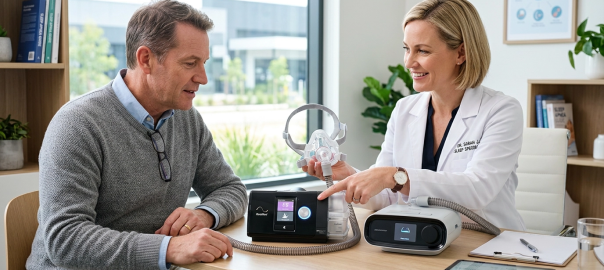
Choosing between ResMed and Philips CPAP machines isn’t just about brand loyalty – noise levels, pressure algorithms, and humidification differ in ways that could affect your sleep and your wallet. Which one actually fits your nights better?
Key Takeaways
- ResMed’s AirSense 11 runs quieter at 27 dBA compared to the Philips DreamStation 2’s 28 dBA, a small but noticeable difference for light sleepers and bed partners
- ResMed’s AutoSet algorithm and Philips’ A-Flex system both auto-adjust pressure, but they take different approaches to comfort and precision
- Get Health Tips breaks down humidification, app tracking, price, and mask fit so newly diagnosed users can pick the right device with confidence
- Sleep apnea treatment success depends heavily on mask fit and a proper sleep test, beyond just the machine itself
- Choosing between ResMed and Philips ultimately comes down to individual sleep habits, budget, and whether comfort or clinical precision matters more
Getting a sleep apnea diagnosis can feel overwhelming, especially when it comes time to pick a CPAP machine that fits daily life. ResMed and Philips are the two names that come up again and again, and both companies build devices that meet high medical standards while taking different approaches to comfort and treatment accuracy. Get Health Tips has compared these two brands closely, looking at ResMed vs Philips CPAP machines for sleep apnea across features, comfort, and value, to help simplify a decision that can otherwise feel like sorting through a pile of specs and marketing claims. This guide walks through the details that matter most for someone new to CPAP therapy or ready to upgrade.
Which CPAP Machine Is Quieter?
Noise matters more than people expect, especially for anyone sharing a bed. The ResMed AirSense 11 operates at 27 dBA, making it one of the quietest CPAP machines on the market today. A clinically reviewed comparison notes the Philips DreamStation 2 comes in at 28 dBA, still whisper-quiet by most standards but measurably louder than its ResMed counterpart. For context, the average CPAP machine produces around 30 decibels, so both devices perform well above average. Anyone who sleeps lightly, or has a partner who does, may notice the difference between these two machines over time.
How Pressure Algorithms Differ
Both brands use auto-titrating technology, meaning the machine adjusts air pressure throughout the night based on breathing patterns rather than delivering one fixed setting. The way each brand handles that adjustment reflects a different philosophy on treatment.
ResMed’s AutoSet Technology
ResMed’s AutoSet algorithm has been refined over decades of clinical use through respiratory therapist review, and is widely regarded as a gold standard in sleep-disordered breathing treatment. The same review notes it responds to inspiratory flow limitation, snoring, and apnea events, and can distinguish between obstructive and central apneas, treating each one appropriately. This level of responsiveness makes AutoSet a strong pick for people who want their machine to track subtle changes in breathing night after night.
Philips’ A-Flex Comfort Relief
Philips takes a comfort-first approach with its A-Flex algorithm, which provides pressure relief right at the start of exhalation. This softens the transition between breathing in and breathing out, which many users describe as feeling more natural. For someone just starting CPAP therapy and still adjusting to the sensation of pressurized air, A-Flex can ease that learning curve.
Humidification and Nightly Comfort
Dry mouth and nasal irritation are two of the most common complaints among new CPAP users, which is why humidification systems deserve real attention. The ResMed AirSense 11 features HumidAir, an integrated heated humidifier with climate control that automatically adjusts humidity based on room conditions, holding 380 mL of water as noted in a device comparison review. The Philips DreamStation 2 pairs its integrated humidifier with heated tubing support and, per the same source, holds 325 mL. Both systems work well at preventing overnight dryness, though ResMed’s climate control tends to respond a bit more precisely to changes in room temperature.
Tracking Progress Through Apps
Modern CPAP machines pair with smartphone apps that turn nightly data into something people can actually understand and act on.
myAir’s Coaching and Insights
ResMed’s myAir app delivers a daily sleep score between 0 and 100, along with mask leak detection, coaching tips, and usage tracking that can support insurance compliance requirements. It also integrates with Apple Health and Health Connect, letting therapy data sit alongside other health metrics, per a CPAP feature comparison. A built-in Test Drive feature helps new users get comfortable with different pressure levels, and a voice-guided Personal Therapy Assistant walks through setup step by step. Reviewers in that same comparison consider myAir the more polished of the two apps for user engagement.
DreamMapper’s Adherence Boost
Philips’ DreamMapper app offers sleep session summaries with trend charts, mask fit check notifications, and adherence tracking through Bluetooth connectivity. A retrospective review of roughly 15,000 SystemOne patients found DreamMapper users showed 22% greater adherence to therapy compared to those who did not use the app. That kind of accountability can make a real difference for people who struggle to stick with treatment in the early weeks.
Comparing Price and Overall Value
The Philips DreamStation Auto CPAP machine bundled with a humidifier and mask runs about $800, a full setup aimed at people who want everything ready to go from night one. The ResMed AirSense 10 AutoSet paired with a mask sits at a similar price point, around $750, reflecting its build quality and precision-focused engineering. Buyers looking for lower entry points can find standalone options too: the Philips DreamStation Pro with a humidifier runs closer to $700, while ResMed’s AirSense 10 Elite and AirStart 10 bundles land around the same $700 to $800 mark. For frequent travelers, the compact ResMed AirMini AutoSet with a mask costs about $1100. The Philips bundle tends to appeal to beginners who want a full, ready-to-use setup with a gentler comfort curve. The ResMed option draws long-term users who prioritize precise treatment data and durability over time. The right pick depends on whether comfort during the adjustment period or long-term treatment accuracy matters more to the individual.
Why Your Mask Choice Matters
Even the most advanced CPAP machine can underperform if the mask doesn’t fit properly. A mask that seals well and matches natural sleeping habits allows pressurized air to work as intended, cuts down on leaks, and makes it far easier to stick with therapy long-term. Both ResMed and Philips offer full nasal masks, nasal pillow styles, and full-face options, and the right pick usually comes down to whether someone breathes through their nose or mouth at night, plus input from a sleep specialist or respiratory therapist.
Should You Get a Sleep Test First?
A sleep test measures how severe obstructive sleep apnea is and gives doctors the information needed to recommend the right machine and pressure settings. Skipping this step and guessing at a device can lead to frustration, poor results, and wasted money. Starting treatment with actual sleep test data behind it cuts down on trial and error and gives therapy a much stronger chance of working from night one.
The Right Machine Depends on Your Needs
There’s no universal winner between ResMed and Philips. ResMed suits people who want quieter operation, detailed tracking, and a machine built around clinical precision. Philips suits people who prioritize a gentler breathing experience and adherence support baked right into the app. Matching the machine to personal sleep habits, budget, and comfort preferences tends to produce far better long-term results than chasing a single best brand. For anyone ready to take the next step, checking out CPAP machine options for sleep apnea can help narrow down the right fit before making a purchase.
