
If you’ve been told CPAP is your only option for sleep apnea, you might be surprised to learn that clinical studies show specific tongue and throat exercises can reduce breathing disruptions by up to 50% in just three months. Here’s exactly which exercises work.
Key Takeaways
- Weak throat muscles are a root cause of airway collapse during sleep – targeted exercises can directly address this.
- Myofunctional therapy (mouth, tongue, and throat exercises) has been shown in clinical research to reduce the apnea-hypopnea index (AHI) by up to 50% in adults and cut snoring frequency by 36%.
- A consistent daily routine of just 8 minutes, three times a day, can produce measurable improvements in mild to moderate obstructive sleep apnea (OSA).
- These exercises work best for mild to moderate OSA and are most effective as a complement to other lifestyle changes – not a universal replacement for medical treatment.
- Keep reading to learn exactly which exercises to do, how to build a sustainable routine, and what timeline to realistically expect.
Most people chasing better sleep focus on mattresses, sleep schedules, or white noise machines. But one of the most overlooked factors sits right inside the mouth and throat. The muscles surrounding the airway are trainable – and building their strength may be one of the most direct, drug-free tools available for reducing snoring and sleep apnea symptoms.
Weak Throat Muscles Are the Real Problem
During waking hours, the muscles in the throat, tongue, and soft palate work together to keep the airway open. The moment sleep hits, those muscles relax. For most people, that is fine. But for a significant portion of the population, the muscles relax too much – causing the airway to narrow or collapse entirely.
When the airway partially closes, air is forced through a smaller space, vibrating the surrounding tissue. That vibration is snoring. When the airway closes completely, breathing stops altogether – that is obstructive sleep apnea (OSA). The body jolts itself partially awake to reopen the airway, often dozens of times per night, fragmenting sleep without the person ever realizing it.
The underlying issue is not just anatomy. It is muscle tone. Weak or undertrained oropharyngeal muscles – those of the tongue, soft palate, and throat – are a major contributor to nighttime airway collapse. This is exactly why exercises that strengthen these specific muscles have emerged as a credible, research-supported intervention. For those seeking non-CPAP options, Get Health Tips covers a range of alternative and complementary therapies worth understanding before choosing a path forward.
What the Research Actually Shows
There is a growing body of clinical evidence supporting throat and tongue exercises as a meaningful intervention for sleep-disordered breathing.
AHI Reductions of 34-50% in Adults
The apnea-hypopnea index (AHI) is the standard measure of sleep apnea severity – it counts the number of breathing disruptions per hour of sleep. A systematic review and meta-analysis found that myofunctional therapy decreased AHI by approximately 50% in adults and 62% in children. Separate research confirmed AHI reductions in the 34-50% range when oropharyngeal exercises were practiced consistently. These are not trivial gains – a 50% AHI reduction can shift someone from moderate to mild sleep apnea classification.
Beyond AHI, the research also showed improvements in lowest overnight oxygen saturation levels and reduced daytime sleepiness – two markers that directly affect quality of life.
36% Less Snoring After 3 Months
One clinical study tracked participants who performed mouth and tongue exercises daily for three months. The results: a 36% reduction in snoring frequency and a 59% decrease in total snoring intensity. A separate study found that performing oropharyngeal exercises for just eight minutes, three times a day significantly reduced snoring and improved OSA symptoms in both primary snorers and patients with mild to moderate OSA. Three months of consistent effort is the window where results start to become measurable.
Tongue Exercises That Strengthen Your Airway
The tongue is the most critical muscle in this equation. When it loses tone during sleep, it can fall back toward the throat and partially block the airway. These exercises directly target tongue strength and positioning.
Tongue Slide
Place the tip of the tongue against the back of the upper front teeth. Slowly slide the tongue backward along the roof of the mouth as far as it will comfortably go, then return to the starting position. This targets the base of the tongue – the section most prone to falling back during sleep. Aim for sets of 10, two to three times daily.
Tongue Press
Suck the tongue upward and press the entire surface flat against the roof of the mouth (the palate). Hold for a moment, then release. This engages the full tongue musculature and builds the kind of sustained tone needed to keep the tongue forward during sleep. Two sets of 10 per day is a solid starting target.
Tongue Protrusion and Retraction
Extend the tongue out as far as possible, hold briefly, then pull it back in fully. Repeat 10-15 times. This movement works the tongue through its full range of motion, building both strength and endurance in the muscles that control its position throughout the night.
Throat and Mouth Exercises for Airway Stability
The tongue does not work in isolation. The soft palate, pharyngeal walls, and surrounding throat muscles all contribute to whether the airway stays open or collapses. These exercises target that broader architecture.
Vowel Sound Repetition
Repeat each vowel – A, E, I, O, U – out loud, clearly and deliberately, for about three minutes a day. The exaggerated mouth movements required to produce each sound engage the muscles of the soft palate and upper throat. Over time, this builds endurance in throat muscles much the way any repeated physical effort builds stamina. Spread the three minutes throughout the day if needed.
Singing and Vocal Exercises
Singing is not just recreational. Research has found that regular vocal practice – including humming scales or singing through favorite songs – strengthens the pharyngeal muscles that support the airway. Even 20 minutes of casual singing daily has been shown to reduce snoring. The variety of sounds produced during singing recruits different muscle groups throughout the throat, providing a more well-rounded workout than repetitive exercises alone. This exercise treatment for sleep apnea was developed through these singing exercises.
Breathing Techniques That Compound Results
Breathing exercises add another layer to the routine by improving respiratory control and reinforcing nasal breathing habits – which plays a bigger role in airway health than most people realize.
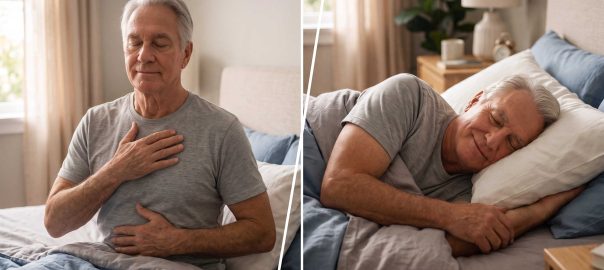
Diaphragmatic breathing is the foundation. Lying on the back with knees bent, one hand on the chest and one on the belly, the goal is to breathe in slowly through the nose so the stomach rises while the chest stays relatively still. Exhale slowly through the mouth. This builds awareness of proper breathing mechanics and trains the body to use the diaphragm rather than relying on shallow chest breathing.
Nasal breathing practice during waking hours is equally valuable. Keeping the mouth closed and breathing through the nose during the day makes nasal breathing more automatic during sleep. Mouth breathing bypasses the natural filtration the nose provides and contributes to greater airway instability at night.
Pranayama breathing, a yogic breathing discipline, has also shown promise when combined with oropharyngeal exercises. Research on OSA patients found that combining the two approaches led to measurable reductions in snoring frequency and daytime sleepiness, while improving overall sleep quality.
How to Build a Consistent Daily Routine
Knowing the exercises is only half the equation. The missing ingredient for most people is a realistic structure that actually sticks.
- Anchor exercises to existing habits – pair tongue exercises with brushing teeth, vowel repetitions with a commute, and singing with household chores.
- Start small – two or three exercises for the first week, adding more as they become habitual.
- Three sessions per day, 8 minutes each is the protocol supported by the strongest research on snoring outcomes.
- Track progress loosely – a sleep tracker or even a partner’s feedback on snoring can serve as a simple accountability measure.
When to Expect Results
Three months is the benchmark. The 36% snoring reduction study ran for three months. Most clinical research showing meaningful AHI changes used protocols of similar length. Muscle development takes time – the oropharyngeal muscles are no different from any other muscle group. Noticeable changes in snoring may come within weeks, but significant, measurable improvements in OSA symptoms typically emerge after two to three months of consistent daily practice.
These Exercises Work Best – But Not for Everyone
Oropharyngeal exercises are genuinely effective for many people, but they are not a universal fix. The research consistently shows the strongest results in people with mild to moderate OSA – particularly those whose airway problems stem from poor muscle tone or tongue positioning. People with severe OSA, significant anatomical obstructions, or obesity-related airway compression are less likely to see substantial improvement from exercises alone.
These exercises are best understood as a powerful complement – to weight management, positional therapy, nasal breathing habits, and for some, CPAP therapy. They are a genuine, evidence-backed tool for the right candidate. Anyone with suspected or diagnosed sleep apnea should work with a sleep specialist to confirm diagnosis severity and determine where exercises fit into their overall plan. A myofunctional therapist can also provide personalized guidance, correcting form and progressing the routine in ways a general guide cannot.
For those who have already tried CPAP and struggled with compliance, or those managing mild symptoms and seeking non-device options, these exercises represent a meaningful and well-researched place to start.
For more on managing sleep health naturally, visit Get Health Tips – a resource dedicated to practical, evidence-informed wellness guidance.
